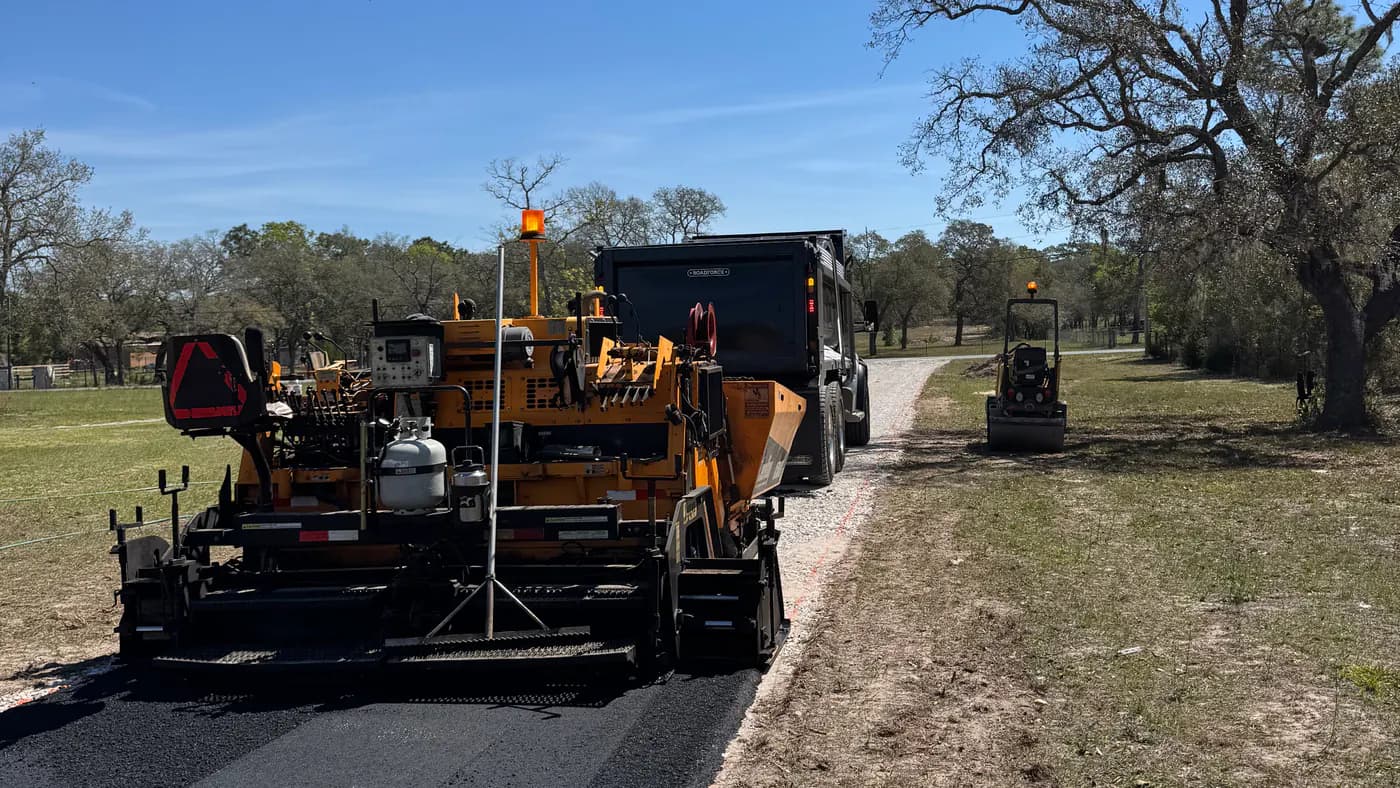
Asphalt Paving in Hudson & West Central Florida
Driveways, parking lots, private roads, overlays, and reconstruction backed by local experience, documented project work, and clear proposals.
Why Our Asphalt Paving Stands Apart
Our family paving heritage dates to 1960, and today we complete residential and commercial pavement work across Pasco, Hernando, and Pinellas counties. We evaluate traffic, drainage, base condition, access, and transitions before recommending a pavement section. Proposals identify the planned preparation, asphalt mix, quantity, compacted thickness, and finish work so property owners can compare scope as well as price.
Paving a home driveway rather than a lot or roadway? Our driveway paving page covers residential work specifically: new installation, resurfacing, mill and pave, millings, and the repair-versus-replace decision.
Recent Paving and Surface Projects
Review documented work in Hudson and nearby West Central Florida communities. Every card retains the actual project location, completion date, scope, and original photos.

Community Basketball Court Resurfacing
Basketball court resurfacing and restriping at a community recreation facility in Hudson. Photos show a blue acrylic surface, yellow boundary markings, white game lines, and multiple hoops.

Floral City Asphalt Driveway & Walkway
New paved asphalt residential driveway and walkway area in Floral City. The recorded scope included added base material and a vegetation-control spray treatment. Previous existing driveway was old asphalt recycled millings and gravel. Elderly couple needed a smooth walkway and driveway for easier mobility and accessibility.

New Port Richey Driveway Extension & Site Preparation
Residential driveway extension and site preparation in New Port Richey. The recorded scope included palm-tree removal, water-line capping, recycled asphalt millings, and a vegetation-control spray treatment. Photos show the finished curved driveway and its connection to the existing access and parking areas.

Community Tennis Court Complex
Tennis-court resurfacing for a multi-court community facility listed in Spring Hill. The recorded scope included an acrylic coating system and new court striping. Photos show multiple courts, lighting poles, nets, and spectator benches.
Hudson and Pasco County project planning
Know the Site Before Choosing the Pavement Section
A durable paving proposal starts with the property, not a universal thickness. We evaluate the existing surface and base, expected vehicle loads, drainage path, edge conditions, transitions, and access requirements before recommending new construction, an overlay, mill-and-pave work, or full-depth repair.
Hudson properties are generally within unincorporated Pasco County, but roadway ownership and project boundaries still matter. Work that reaches a County or State right of way, changes a driveway connection, adds fill, or alters drainage may require review by the responsible agency.
Complete Asphalt Paving Services
From new construction to overlays and reconstruction, we handle every phase of asphalt paving with precision.
New Asphalt Installation
Complete new parking lot or driveway construction from subgrade to finish.
- Site preparation based on soil, elevations, drainage, and intended use
- Aggregate base work where the evaluated pavement section requires it
- Hot-mix asphalt placed for the project-specific application
- Drainage details and structures included when they are part of the agreed scope
- Edge, transition, and compaction work suited to the site
Estimate factors: area, excavation, base condition, drainage, access, asphalt section, and finish work
Asphalt Overlays
Restore aging asphalt with a new wearing surface over existing pavement.
- Existing surface milling (if needed) for proper height
- Tack coat application for bonding between lifts
- Overlay section selected for the evaluated pavement and intended traffic
- Edge transitions and ramping to match existing grades
- Recommended only when underlying conditions can support an overlay
Estimate factors: surface repairs, milling, elevations, tack coat, asphalt quantity, transitions, and access
Mill & Pave Services
Remove a controlled depth of existing pavement and install a new asphalt surface where conditions support that approach.
- Milling depth selected from field conditions and the planned final elevation
- Reclaimed asphalt handled according to the project and receiving-facility requirements
- Proper slope correction and drainage improvements
- New asphalt section defined in the proposal
- Well suited for parking lots with surface deterioration
Estimate factors: milling depth, haul-off, repairs, asphalt section, phasing, drainage corrections, and striping
Full-Depth Reconstruction
Complete removal and replacement when base has failed or severe damage exists.
- Complete removal of failed asphalt and base material
- Subgrade evaluation and correction of drainage issues
- New or repaired base designed for evaluated soil and loading conditions
- Asphalt placed in the lift arrangement defined for the project
- Required when alligator cracking or base failure present
Estimate factors: removal depth, disposal, subgrade repair, base, drainage, asphalt, utilities, access, and phasing
Our 7-Step Paving Process
Site Evaluation & Proposal
Review the existing pavement, drainage, traffic, access, edges, and transitions. The proposal defines the recommended preparation, materials, quantities, and project limits.
Subgrade Preparation
Remove unsuitable material and correct soft or unstable areas as included in the scope. Grades are established to support the approved drainage plan and adjacent elevations.
Base Installation & Compaction
Install and compact the specified base material where required. Material, depth, moisture conditioning, and acceptance criteria depend on the design and contract requirements.
Tack Coat Application
Apply the specified tack material to prepared surfaces and contact areas where required to support bonding between pavement layers.
Hot-Mix Paving
Coordinate asphalt delivery and placement so the mix remains workable for the lift, weather, haul distance, and site geometry. Thickness and mix follow the agreed project scope.
Compaction and Finish Rolling
Adjust the rolling pattern to the mix, lift, temperature, edges, and site constraints. Contract testing or density documentation is performed when included in the project specifications.
Final Inspection & Documentation
Review the completed surface, drainage path, edges, transitions, and agreed finish work. The crew provides project-specific opening and care instructions.
How the Pavement Section Is Selected
Mix and Lift Selection
- Traffic and use: Passenger vehicles, refuse trucks, delivery traffic, and turning areas place different demands on pavement.
- Project specifications: Mix type and lift arrangement are selected for the application and any owner or agency requirements.
- Existing conditions: Elevations, tie-ins, drainage, and the condition of the base can limit whether an overlay is suitable.
Placement and Compaction
- Weather and delivery: Placement is coordinated around rain, surface condition, haul distance, and workable mix temperature.
- Rolling pattern: Roller type, sequence, and passes are adjusted to the mix, lift, edges, and site geometry.
- Acceptance: Testing or documentation is included when the contract or governing specification calls for it.
What the Proposal Should Define
A useful paving proposal explains what will be removed or prepared, how failed areas and drainage will be handled, the proposed base and asphalt work, important transitions, striping or finish work, and site-access assumptions. Final quantities and section details depend on the field evaluation.
Why Property Owners Choose Us
Spec-Driven Proposals
Proposals explain the recommended preparation, pavement work, project limits, finish details, and important site assumptions.
Project-Fit Equipment
Equipment and crew planning are matched to access, production needs, site geometry, and the agreed pavement scope.
Florida Climate Experience
Experienced with Florida heat, UV exposure, oxidation, and heavy rains and how they affect asphalt performance.
Photo-Verified Work
Documented project photos help property owners review completed work, edges, transitions, drainage details, and overall finish.
Clear Scheduling
We discuss current availability, access constraints, phasing, and weather dependencies before work is scheduled.
Direct Communication
You work directly with ownership for clear answers and faster decisions throughout the project.
Florida Climate & Asphalt Paving
Paving in Florida's Extreme Heat
Florida's intense UV exposure, high humidity, and heavy seasonal rains create unique challenges for asphalt paving. Our local crews account for those conditions when selecting materials, planning drainage, and installing each pavement system.
- UV Resistance: Sun and heat contribute to oxidation over time. Mix selection and any future maintenance recommendation should reflect the pavement use, condition, and manufacturer guidance.
- High Water Table: Groundwater and poorly draining soils can affect base performance. Site elevations, soil conditions, runoff, and suitable drainage measures need to be evaluated together.
- Heavy Seasonal Rain: Frequent heavy rain makes positive drainage and sound edge conditions important. Material choices depend on the design, traffic, and project specifications.
- Heat Tolerance: High surface temperatures can keep new asphalt more susceptible to scuffing and concentrated loads. Work and opening guidance are adjusted to actual conditions.
- Expansion/Contraction: Pavement moves with temperature and loading. Sound joints, supported edges, suitable transitions, and project-specific opening guidance help reduce avoidable damage.
Private Road & Entry Paving Specialists
Serving unincorporated areas of Pasco and Hernando counties where property owners maintain private roads, entrances, and access ways. These projects require careful planning for drainage, emergency access, shared ownership, easements, and any connection to a public right of way.
Common Private Road Projects
- Subdivision entrance roads & private streets
- Ranch and farm access roads (200'+ lengths)
- Multi-property shared driveways
- Rural community roads (unincorporated areas)
- Private marina and boat ramp access roads
Why Private Roads Choose Us
- Shared-scope clarity: Define project limits, access needs, and owner responsibilities before scheduling
- Jurisdiction review: We identify likely County, right-of-way, drainage, and driveway-connection requirements
- Drainage review: Important for private roads without municipal storm systems
- Flexible scheduling: Work around all property owners' access needs
Private Road Paving: What to Review
Confirm ownership, easements, vehicle needs, emergency access, and any applicable agency requirements.
Design preparation and pavement for the actual soil, existing base, traffic, and maintenance plan.
Document runoff direction, low points, culverts, swales, and connections before changing grades.
Featured Service-Area Guides
Explore paving information for Hudson and other West Central Florida communities
Common Paving Questions
What is the minimum thickness for asphalt paving?
There is no single thickness that fits every property. The pavement section should reflect the expected vehicles, base and soil condition, drainage, asphalt mix, and any project or jurisdictional specifications. We identify the proposed compacted thickness and preparation in the project scope.
Can you pave over my existing driveway (overlay)?
Sometimes. An overlay can be appropriate when the existing pavement and base remain stable, elevations allow added material, and drainage and transitions can still work. Widespread base failure, movement, or unresolved water problems may require milling or reconstruction instead.
How long until I can drive on my new asphalt?
The crew will provide project-specific opening guidance based on the asphalt mix, lift, weather, site use, and final surface condition. New asphalt remains more vulnerable to scuffing and indentation at first, especially in hot weather, so avoid sharp stationary turns and concentrated loads until cleared.
Do you handle permitting for paving projects?
We identify likely permitting and right-of-way requirements during the site visit and can coordinate required project documentation. The property jurisdiction, roadway ownership, drainage work, and project limits determine which approvals apply, and the responsible public agency makes the final determination.
Ready for Professional Asphalt Paving?
Request a site-specific proposal that explains preparation, materials, drainage, access, and finish work.
Free project estimates • Family paving heritage since 1960