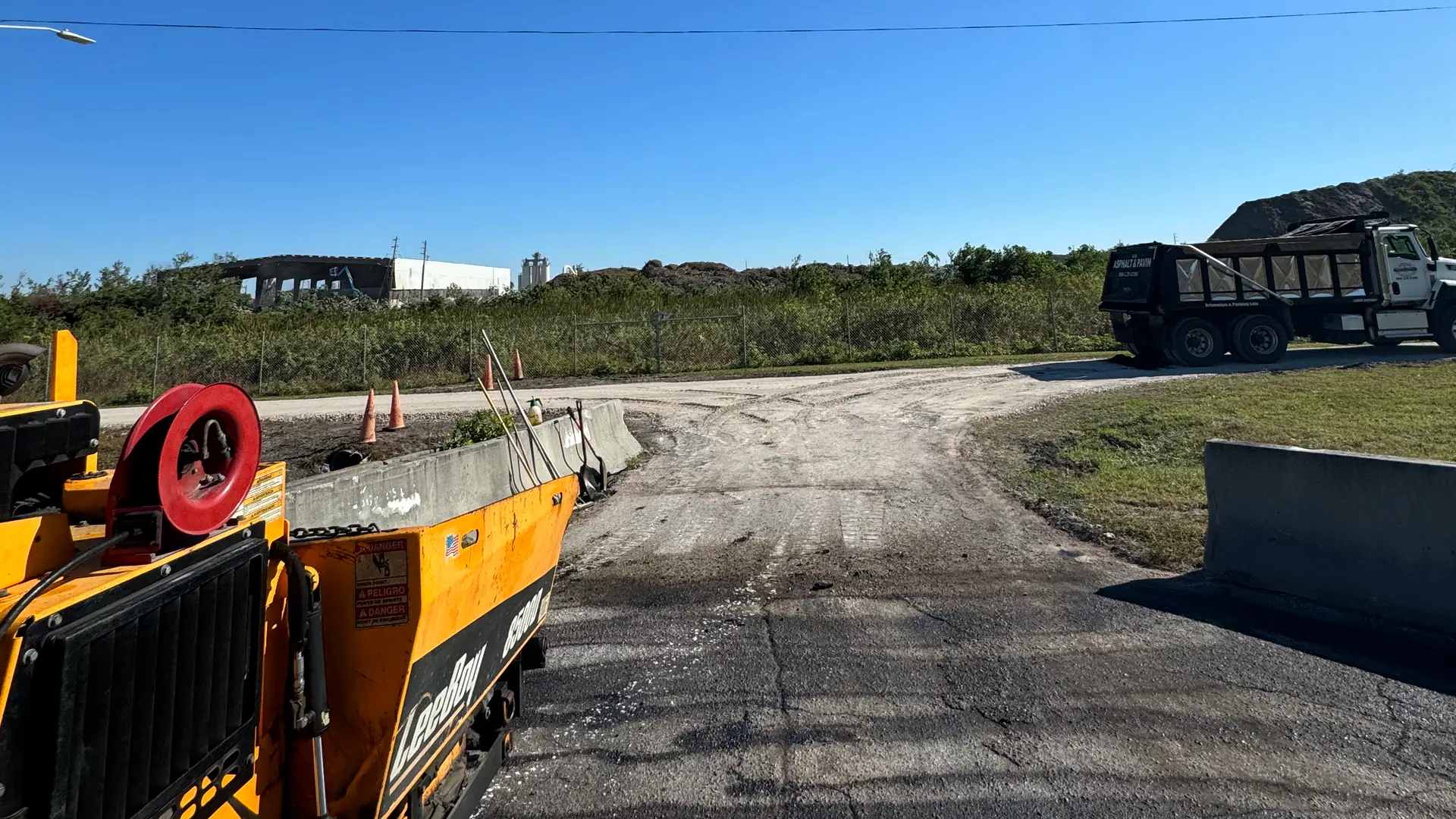
Infrared Asphalt Repair in Hudson, FL
Infrared heat can soften suitable existing asphalt so it can be reworked with repair material. We evaluate potholes, failed joints, utility cuts, and low areas to determine whether the method fits the damage.
Heats suitable existing asphalt • Reworks material in place • Compacts the repaired area • Scope confirmed after inspection
How Infrared Asphalt Repair Works
Infrared equipment applies controlled heat to a defined repair area. When the asphalt is suitable, the softened material can be loosened, combined with repair mix as needed, graded, and compacted to reduce a hard cut line around the patch.
The method is generally considered for localized surface damage where the existing asphalt can be reheated and reworked. It may reduce removal and disposal for a suitable repair, but failed base material, standing water, contamination, or deep structural damage can require another method.
Infrared repair is one option, not a universal replacement for saw-cut patching or reconstruction. We inspect the repair area, surrounding pavement, drainage, and likely depth of failure before recommending it.
Potential Applications for Infrared Repair
🕳️ Potholes & Surface Failures
Heat a defined area, loosen suitable asphalt, add repair material as needed, grade, and compact. Base failure or contaminated pavement may require another repair method.
Good candidate: localized, surface-level failure
Assessment: base and drainage still need review
🔧 Utility Cut Repairs
Infrared heat may help rework the transition around a suitable utility-cut patch. Settlement or failed backfill must be addressed before surface repair.
Good candidate: sound patch with a surface joint
Assessment: check settlement and backfill
🔀 Failed Joint/Seam Repairs
Heating both sides of a suitable joint can allow the material to be reworked and compacted across the transition.
Good candidate: localized open or uneven joint
Assessment: identify why the joint failed
🌊 Low Spots/Bird Baths
A shallow low area may be reheated and regraded when the surrounding pavement and base remain stable. Larger drainage problems can require milling, base work, or new drainage.
Good candidate: shallow localized depression
Assessment: confirm drainage path and base
🚗 Speed Bump Modifications
Some asphalt speed-bump adjustments can be completed by reheating and reshaping material. The existing thickness, condition, and requested profile determine suitability.
Good candidate: localized asphalt reshaping
Assessment: profile, condition, and access
🏪 Manhole/Valve Adjustments
Asphalt around a utility cover may be reheated and adjusted when the structure, frame, and surrounding base are stable.
Good candidate: localized surface transition
Assessment: frame, base, elevation, and drainage
Infrared vs. Traditional Repair Methods
| Comparison Factor | Infrared Repair | Traditional Patch | Saw Cut & Replace |
|---|---|---|---|
| How Material Is Handled | Existing asphalt is reheated and reworked | Patch material is placed in the opening | Damaged pavement is cut and removed |
| Patch Edge | Reworked transition | Depends on preparation | Saw-cut perimeter |
| Candidate Conditions | Suitable localized surface damage | Depends on material, preparation, and failure depth | Deeper failure or base work |
| Price Basis | Area, condition, materials, access | Material, preparation, access | Removal, depth, base, materials |
| Traffic Timing | Confirmed for the completed repair | Depends on product and conditions | Depends on materials and scope |
| Removal May Be Required | Sometimes | Sometimes | Yes |
| Disposal | May reduce removed material | Depends on preparation | Removed material is handled in the scope |
Heating Technology
Infrared heat is applied in a controlled area until suitable asphalt becomes workable. Temperature and exposure are monitored for the material and conditions.
Adjusted to the repair conditions
Rejuvenation Effect
Heating softens compatible asphalt so it can be loosened, reworked, and combined with repair material where needed.
Suitability checked on site
Thermal Bonding
Reworking the heated edge can reduce the hard transition associated with a cut patch. Surrounding cracks and drainage still need evaluation.
No universal performance claim
The Infrared Repair Process
Area Preparation
Clear loose debris and standing water, define the repair area, and position the heater for the observed damage. Contamination, deep failure, or unstable base can change the method.
Controlled Infrared Heating
Apply and monitor heat until suitable asphalt becomes workable. Heating time and temperature depend on the material, pavement condition, moisture, weather, and equipment setup.
Scarification & Repair Material
Loosen the heated asphalt and remove unsuitable material. Add compatible repair mix as needed to restore the planned elevation before compaction.
Blending & Grading
Work the repair material with the softened existing asphalt and grade the area toward the planned elevation and drainage path. The finished repair may remain visible against older pavement.
Compaction & Finishing
Compact the material while it remains workable, finish the edges, and inspect the grade. Traffic timing is confirmed for the completed repair and current conditions.
What Affects the Project Schedule
Repair Area
Size and Depth
Site Access
Traffic and Phasing
Conditions
Weather and Moisture
How Infrared Repair Is Estimated
Project-Specific Pricing Factors
Repair Area
Length and width
Depth of distress
Number of repair areas
Photos help, but do not replace inspection
Pavement Condition
Surface and base stability
Moisture and contamination
Surrounding cracks and joints
Infrared only when the site is suitable
Project Logistics
Access and traffic control
Materials and disposal
Weather and scheduling
Scope and price documented before work
Reasons Infrared May Fit
- Existing material may be reworked in place
- Can reduce the amount of saw cutting for a suitable area
- Can soften the transition at the repair edge
- Can be considered for several localized areas in one visit
Reasons Another Method May Fit
- Unstable or saturated base material
- Deep, widespread, or structural failure
- Contaminated or unsuitable existing asphalt
- Drainage problems that require grading or reconstruction
Infrared Repair FAQs
What affects the service life of an infrared repair?
Base condition, drainage, repair depth, traffic, surrounding pavement, material condition, and compaction all affect performance. Infrared can improve the transition at a suitable repair edge, but no method has one accurate lifespan for every site.
Can infrared repair fix any size area?
Repair size is only one factor. Infrared is generally considered for localized damage where the existing asphalt can be reheated and reworked. Widespread distress, deep base failure, contamination, or major drainage work can make another method more appropriate.
Does weather affect infrared repairs?
Yes. Rain, standing water, wind, pavement temperature, and moisture affect heating and compaction. Work is scheduled only when conditions are suitable for the selected repair method.
When is infrared a better fit than saw-cut patching?
Infrared may fit localized surface failures where existing asphalt remains suitable for reheating. Saw-cut patching or reconstruction may fit better when failed material must be removed, the base needs repair, or the affected area is too deep or widespread.
Can infrared repair rejuvenate old asphalt?
Heating can soften compatible asphalt so it can be reworked within the repair area. It does not reverse widespread oxidation or correct an unstable base, and a rejuvenating product would be used only when appropriate for the material and scope.
How much does infrared asphalt repair cost?
Pricing depends on the number and size of repair areas, pavement condition, materials, access, traffic control, travel, and whether base or drainage work is needed. We inspect the site before providing a written, project-specific estimate.
Ask Whether Infrared Repair Fits Your Pavement
Send the property address and photos, then request an on-site assessment and written estimate.
Free project estimates • Family paving heritage since 1960