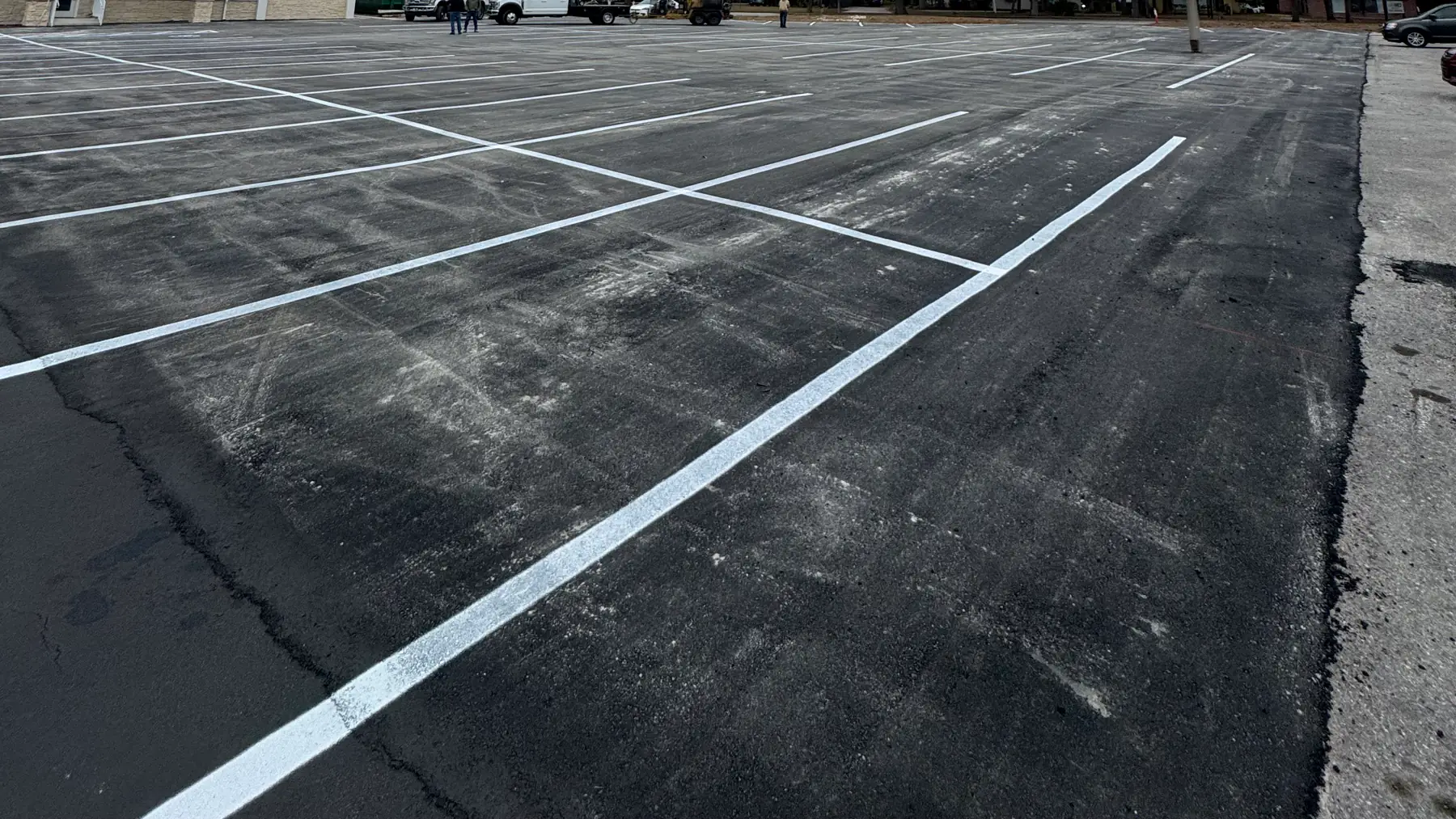
Professional Parking Lot Striping in Hudson, FL
New layouts and restriping for parking stalls, accessible spaces and aisles, fire lanes, arrows, crosswalks, curbs, and stencils. Work follows the owner-approved layout and specified materials.
Striping alone cannot certify an entire property’s accessibility or fire-code compliance. Counts, grades, routes, signs, dimensions, and markings must be coordinated with current approved plans and governing requirements.
More Than Just Paint on Pavement
Visible markings help organize parking, pedestrian crossings, loading areas, fire lanes, and traffic flow. A restriping scope should begin with the existing layout, property operations, pavement condition, owner requirements, and any approved plans.
Asphalt Paving and Maintenance stripes parking lots across Hudson and West Central Florida. Paint or marking material, color, line width, surface preparation, reflectivity, and opening time are selected from the contract documents and product instructions.
Existing lines can sometimes be followed for a like-for-like restripe. A changed layout requires owner approval and may require a qualified designer, accessibility review, fire-authority input, permitting, or removal of obsolete markings before new work begins.
Complete Parking Lot Marking Services
Accessible Parking Markings
Mark spaces, access aisles, symbols, and related areas from the approved layout. Striping does not correct noncompliant slopes, routes, curb ramps, counts, or signs outside the painting scope.
Confirm: current plan, required count, dimensions, route, grades, signs, and markings
Fire Lane Marking
Paint curbs, lines, text, and related markings from an owner-approved or authority-approved fire-lane plan.
Confirm: responsible fire authority, lane limits, color, text, spacing, and signs
Standard Parking Stalls
Restripe existing stalls or install a new approved layout with perpendicular, angled, compact, numbered, reserved, or specialty markings as specified.
Confirm: stall geometry, aisle width, setbacks, wheel stops, curbs, and traffic pattern
Directional Markings
Entry/exit arrows, stop bars, crosswalks, speed limit stencils, "STOP" markings, and custom directional flow indicators.
Install from the approved traffic and pedestrian layout
Accessibility Items to Coordinate Before Striping
Required accessible-space counts and configurations depend on the facility, total parking provided, current standards, approved plans, and applicable state or local requirements. A painting contractor should not invent a layout from a generic table.
Confirm in the Project Documents
- • Required count and van-accessible configuration
- • Space and access-aisle dimensions
- • Surface grades and drainage
- • Signs, symbols, colors, and markings
- • Route to an accessible entrance
Conditions Striping Cannot Fix
- • Excessive or irregular surface slopes
- • Missing curb ramps or route connections
- • Damaged pavement, wheel stops, or barriers
- • Incorrect signs or mounting
- • A layout that lacks required design approval
Our Striping Process
Layout Design & Planning
Confirm whether the work follows existing markings or a new owner-approved layout. Review project documents, pavement condition, traffic flow, accessible parking, fire lanes, curbs, signs, colors, and areas that must remain open.
Surface Preparation
Remove loose debris and prepare the pavement as required by the selected marking material. Existing paint, sealcoat, oil, moisture, and obsolete lines can affect adhesion and may require additional treatment or removal.
Layout & Approval
Establish control points and mark the agreed stalls, aisles, arrows, crossings, and specialty areas. Changes to the approved layout should be resolved before paint is applied.
Marking Application
Apply the specified paint or marking system within its surface, temperature, moisture, thickness, and application requirements. Line width, color, beads, and specialty materials follow the project documents.
Stenciling & Final Details
Apply the agreed symbols, arrows, text, curb markings, and stencils, then protect the work until the selected material is ready for traffic under actual conditions. Install signs only when they are included in the approved scope.
Off-Hours Work Is Site-Dependent
Evening or weekend work may be considered after reviewing lighting, noise restrictions, weather, material cure requirements, staffing, traffic control, and safe access. Reopening time is never assumed in advance.
Marking Materials & Estimate Factors
Standard Water-Based
A common parking-lot paint category; suitability and opening time depend on the exact product, surface, weather, application, and traffic.
- Use within product temperature and moisture limits
- VOC and environmental data are product-specific
- Wear varies with traffic, turning, surface, prep, sun, and drainage
- Color, thickness, and beads follow the project specification
High-Build or Specialty Traffic Paint
Higher-build or specialty traffic coatings may be considered where the product and pavement are suitable.
- Confirm intended substrate and traffic exposure
- Glass beads included only when specified and compatible
- Drying, cure, and recoat windows follow product data
- Compare material, preparation, application, and traffic-control scope
Thermoplastic
A heat-applied marking system used for certain applications when the substrate, specification, and installation conditions permit it.
- Requires compatible equipment and controlled application
- Performance depends on traffic, substrate, thickness, and installation
- Thickness and beads follow the governing specification
- Not suitable for every parking-lot surface or marking
Standard Colors Available
Custom Stenciling Available
Company logos, reserved space names, apartment numbers, directional text, safety messages, loading zone markings
Estimate factors include stencil size, quantity, color, layout, material, preparation, access, and traffic control.
Parking Lot Striping FAQs
How often should parking lots be restriped?
There is no fixed interval. Inspect visibility, wear, color, surface condition, traffic patterns, turning areas, drainage, prior material, and any owner or authority requirements. Restripe before markings become too difficult to follow or document the layout from approved plans.
Can you add more parking spaces to my existing lot?
A changed layout may be possible, but capacity cannot be evaluated from stall width alone. Drive aisles, accessible parking, fire lanes, setbacks, pedestrian routes, landscaping, drainage, zoning, and local approval can all limit the design. Obtain an approved layout before restriping changes.
What happens if I don't meet ADA requirements?
Accessibility obligations extend beyond paint. Required counts, dimensions, surface grades, access aisles, curb ramps, signs, and a connected route may all apply. The property owner should use current approved plans and qualified guidance; we can install the contracted markings but cannot certify the entire site through striping alone.
How long does striping take to dry?
Drying and opening time depend on the exact material, application thickness, pavement temperature, air temperature, humidity, wind, surface condition, and forecast. The area remains protected until the installed product and actual conditions satisfy its opening guidance.
Do you remove old striping or paint over it?
A like-for-like restripe may follow sound existing markings after suitable preparation. Layout changes can require removal or treatment of obsolete lines; black paint alone can remain visible as pavement weathers. The method depends on the old material, surface, new coating, appearance goals, and approved layout.
Can you stripe newly sealed parking lots?
Yes, when the sealcoat manufacturer’s cure and striping requirements are met and the surface is clean, dry, and suitable for the selected marking material. Timing varies with the products, application rate, weather, and site conditions, so it is set for the specific project.
Professional Striping Throughout West Central Florida
Scheduling depends on project scope, access, weather, material requirements, and current availability
Planning Parking Lot Striping?
Request an estimate based on the approved layout, surface preparation, marking material, stencil work, access, and traffic control.
Free project estimates • Family paving heritage since 1960